Our approach
How we see the body, and how we train with you
Most people who come to Green Box don't want to become athletes. Your body may feel a little unfamiliar; some places keep aching, some movements feel hard to trust, or you simply want to take it seriously for once. This page is about why we teach the way we do, and what we're doing in a session.
Why we teach this way
02Recurring aches and limits in movement rarely have a single cause. They can relate to old injuries, long-held postures and work habits, sleep and stress, strength and activity levels — or to the body protecting itself by settling into the movements it knows best. Usually it is several things together that shape how you move.
So we don't rush to conclusions, and we don't rush to press a standard movement onto you. We watch how you move and where it catches, then try together to see whether there are other options. We call the movement that forms naturally through trying — body, task and environment acting on each other — “organic movement”.
This is our way of working, not a guarantee and not a diagnosis. Every body, life and rhythm is different; what we can do is walk alongside you for a while and help you see more of your own options. If pain persists or worsens, please have a medical professional assess it first.
03
How we look at you
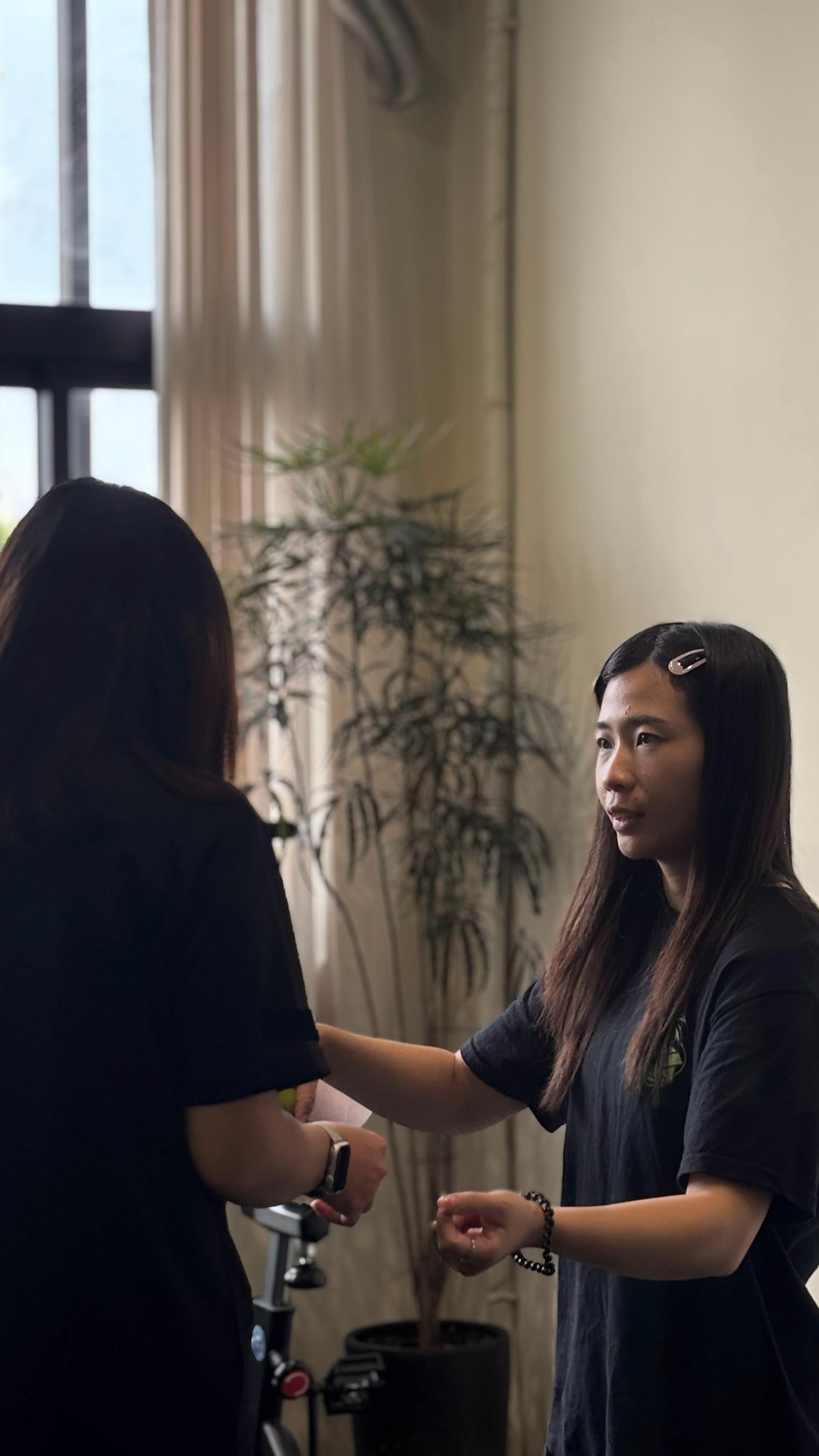
A coach starts by getting a sense of how you are today: how you slept, what soreness the last session left, what you want to be able to do in daily life. Sometimes that comes out in conversation, sometimes from watching you try a movement.
We look at both sides. What you feel matters — where it's tight, what feels off, which movement makes you uneasy. What the coach sees matters too — range, steadiness, how you produce force. The two sometimes agree and sometimes don't; both are clues. The coach adjusts to them, offering a reminder or a correction when it helps, and your feedback changes the next set and the next session.
Weight and difficulty follow how you perform. If you want to slow down, or try once more, just say so.
04
What we use to work with you
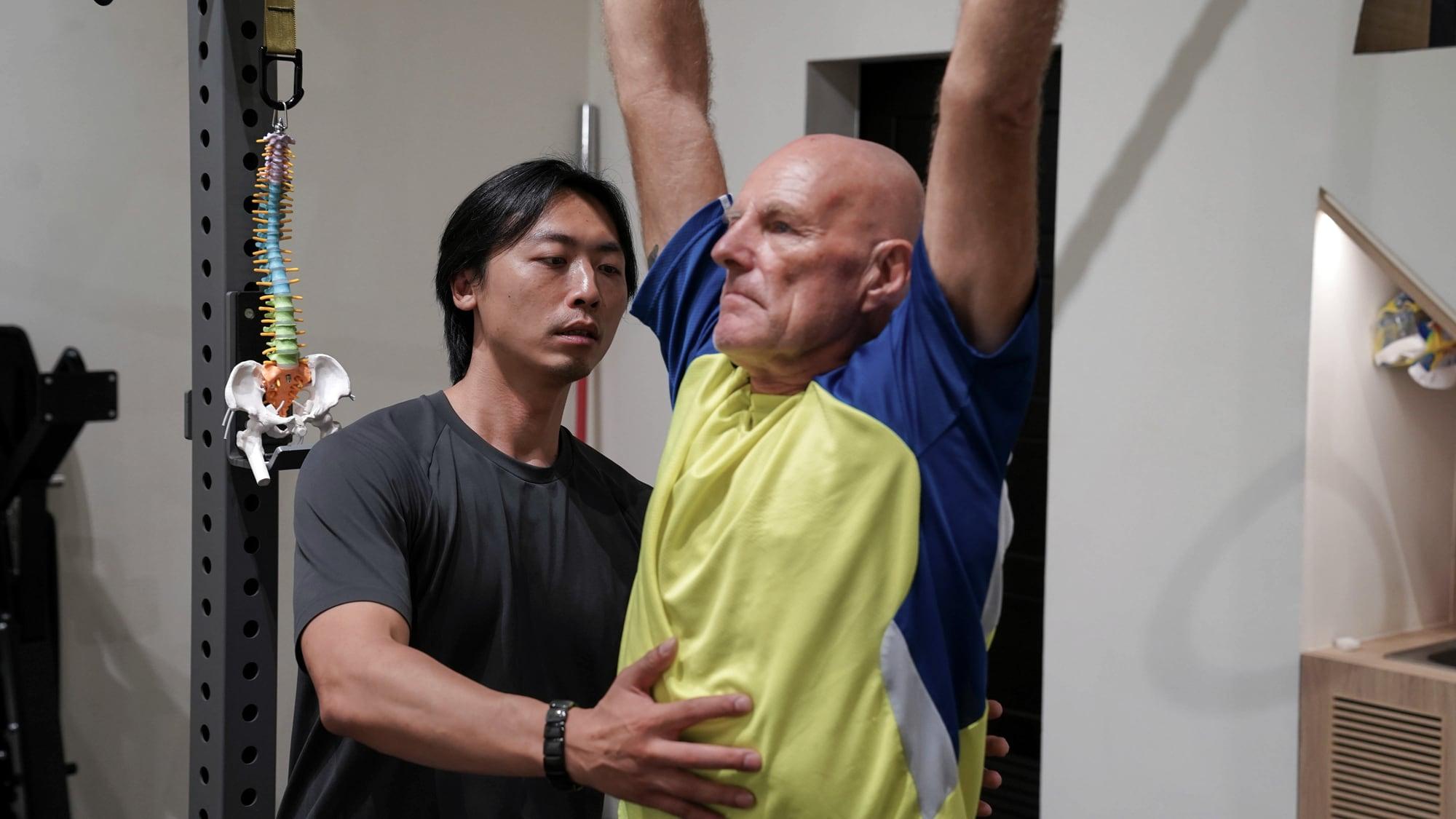
The methods are practical: explaining, demonstrating, trying it with you, watching, and — when it helps — a light hand to guide. Which ones, and how much, depends on you and the movement that day: sometimes one demonstration is enough, sometimes you try first and we add to it afterwards, sometimes it's just a word or a light touch. When useful, we also use equipment or a spine model to make the idea clear.
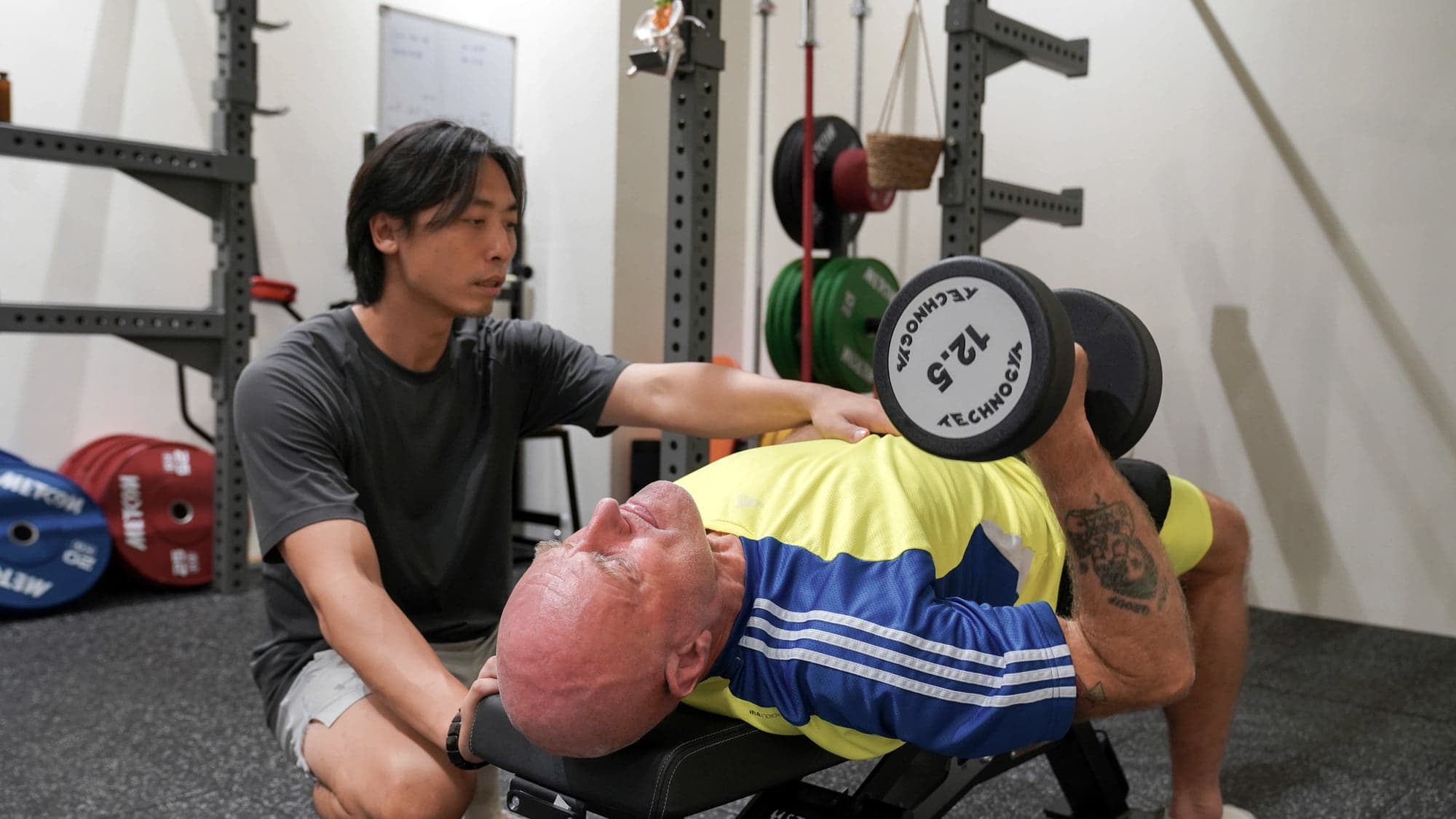
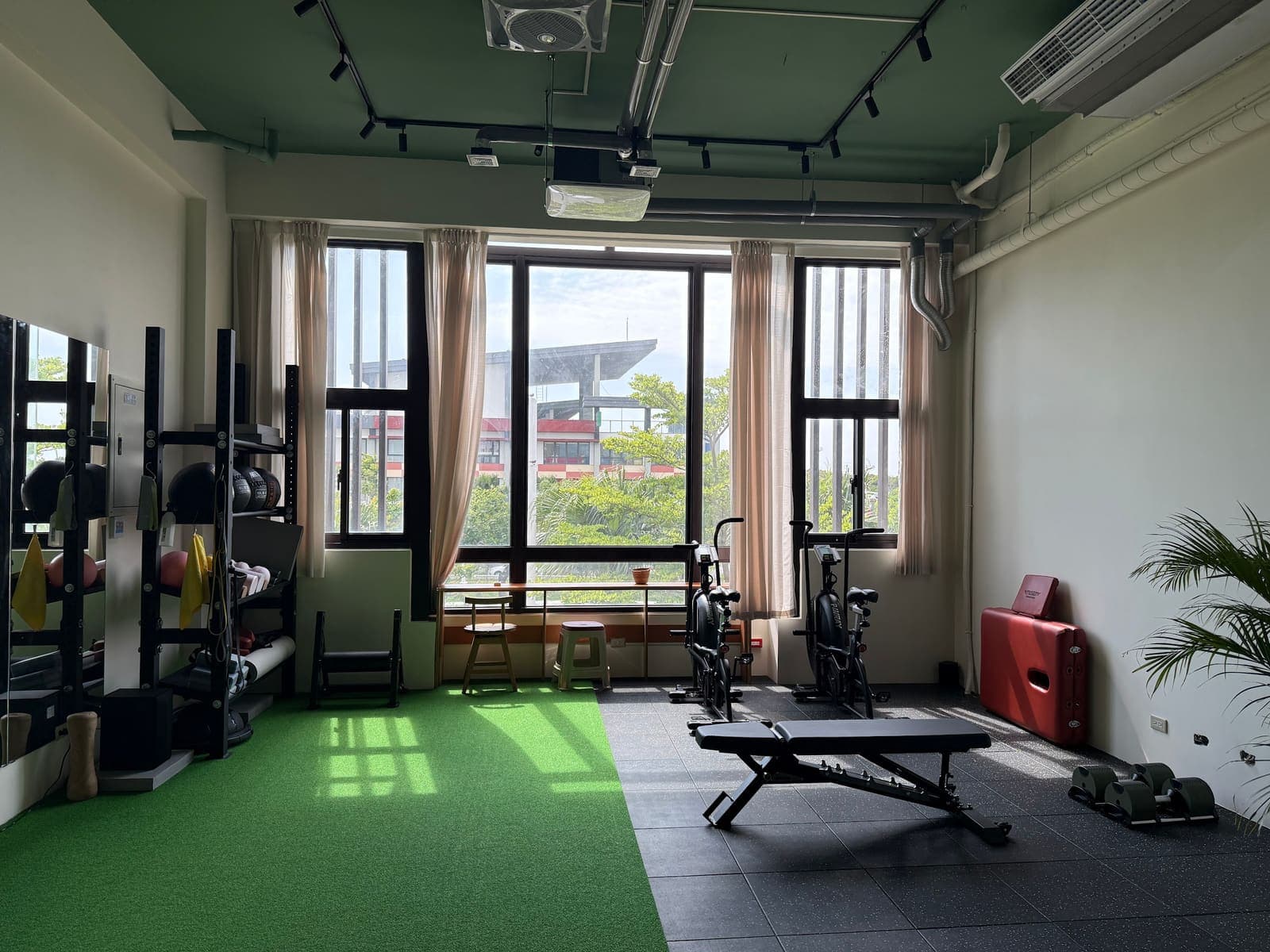
The equipment is what you can see in the studio: cable machine, dumbbells, resistance bands, mats, and foam rollers and massage balls for easing off afterwards. The same movement can be done with bodyweight or with added resistance — whichever suits you now.
05
How movement exploration, resistance training, breath and awareness fit together
These are not a fixed routine; they are a few things a coach can draw on. Which one, and how much, depends on your body that day and what you want to do.
Movement exploration: Try different ways of doing it, and notice which feels smoother, steadier or stronger.
Resistance training: Strength is valuable in itself: it makes everyday movement steadier and gives you more room to spare. Resistance is also a way to learn a movement — a little load can make it easier to feel how the movement wants to be done.
Breath and body awareness: Not a fixed step. When you hold your breath, strain, or your attention drifts away from your body, a coach may ask you to notice your breathing or how a certain part feels; some classes, such as the gentler group classes, give it more room.
These often happen together within the same set, in no particular order. The mix a person needs changes from day to day: some days more trying things out, some days more strength work, some days just letting the body settle.
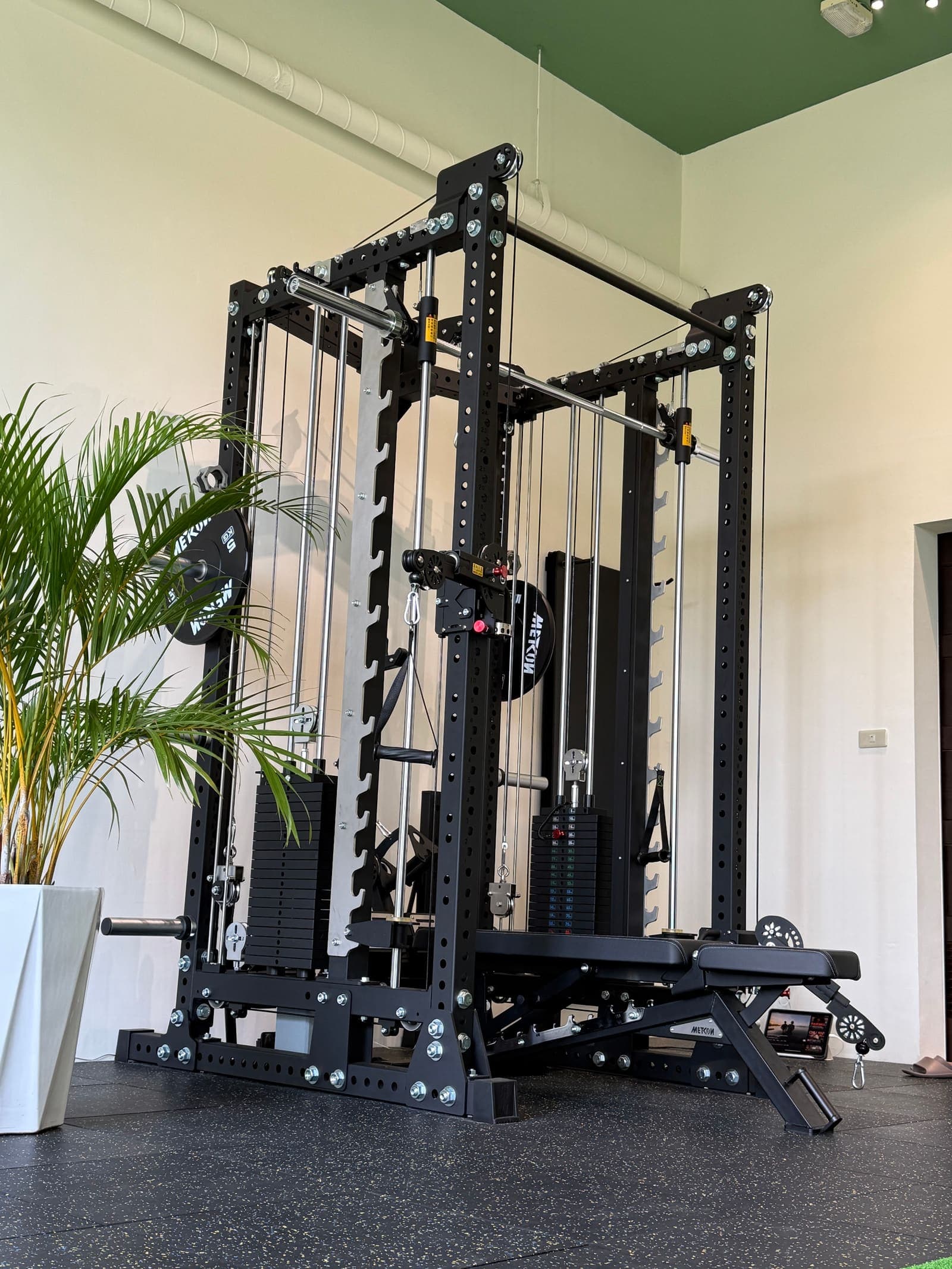
06
Space, and “organic”
“Organic” here doesn't mean eco-friendly, and it isn't the mood of a few potted plants. We use the word to say that movement isn't produced by copying a standard diagram; it takes shape slowly in the interaction between your body, the task in your hands and the environment around you. Take a squat: whether there's weight in your hands, what's under your feet, whether you're facing a wall or a window, whether someone is nearby — each changes the choices the body makes.
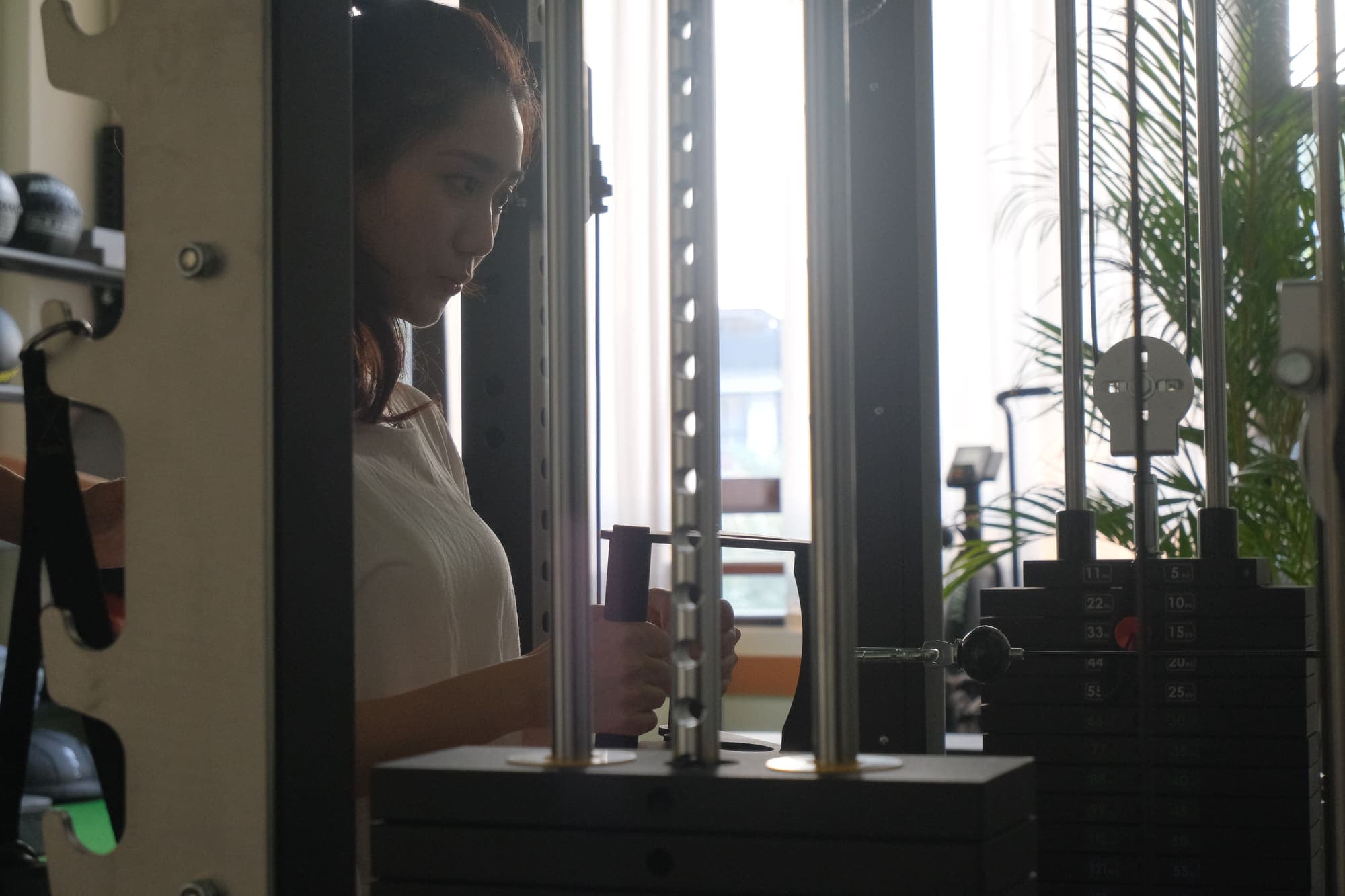
That's why we care about the space. The studio has a full wall of windows, and daylight comes straight in; the training area is laid with turf and mats, there are plants beside the equipment, and you can see the street and trees outside. We hope people can let their shoulders drop a little when they walk in, and that what you practise connects to your actual life — carrying things, climbing stairs, keeping up with kids — and not only to looking good on a machine.
We don't claim the space improves anything. It simply makes “trying to feel yourself” a little easier to begin.
One direction, different ways in
07We have three coaches, and we care about the same thing: looking closely at how you move, and helping you gradually learn how you train.
What differs is how each of us comes alongside you. Some like to make the principle and the steps clear first, then build strength one step at a time; some like to start from how you feel and what you want to do in life, trying and adjusting together; some like to begin with bodyweight movement so you get familiar with it, then move to equipment at your pace. These are different ways in, not different levels. Some people suit one; some open up when they switch.
So in the first chat we listen, then decide together who and which approach to start with — and if it isn't a fit later, just say so. You can see each coach on the home page.
Contact
Want to feel it out first?
You can book a trial session to see how it feels. If you're not sure yet, chat with us on LINE first.